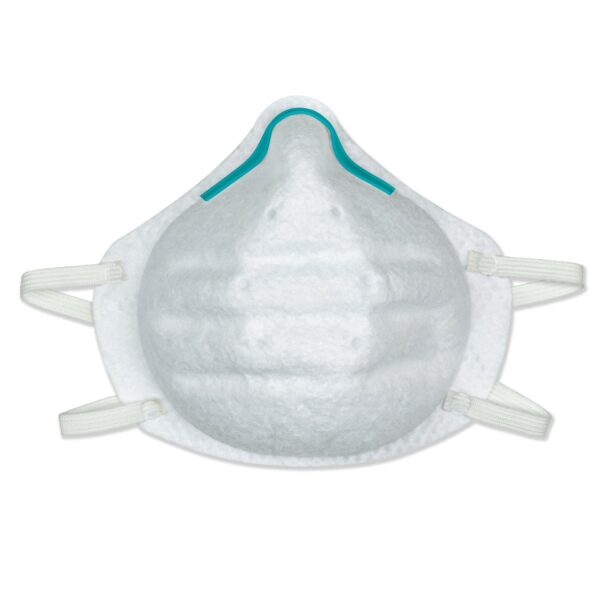
A surgical N95, which is a step beyond a plain N95: as well as filtering at the N95 level it is tested to resist a fluid splash, and it is cleared for use in healthcare settings. That combination makes it the respirator to reach for when the risk is both airborne particles and something wet, from care work to cleaning up after a flood. The moulded cup keeps a spacious chamber in front of the mouth, which suits people who find flat-fold masks close against the face, and the dual-welded straps make it quick to put on and take off.
Key features
- NIOSH-approved surgical N95, approval number TC-84A-9250, cleared under the FDA and NIOSH memorandum 225-18-006
- Fluid-resistant to 160 mmHg when tested to ASTM F1862, the highest of the three splash levels in that standard
- Moulded cup shape with a spacious breathing chamber, in one size
- Dual-welded straps that are easy to put on and take off, with an adjustable nosepiece
- Dye-free and non-sensitising materials, with no latex and no cellulose
- Multi-layer media chosen to keep breathing resistance low
Specifications
- Filter class: N95, under NIOSH 42 CFR Part 84; FDA registered
- NIOSH approval: TC-84A-9250; part number DC365N95HC
- Layers: nonwoven outer filter media, meltblown middle layer, hydrophobic spunbond polypropylene inner layer
- Straps: polyester and spandex, ultrasonically bonded; nose clip: galvanised steel wire encased in polypropylene
- Colour: white with a green nosepiece
- Packed 20 per box, 10 boxes per case; made in the United States
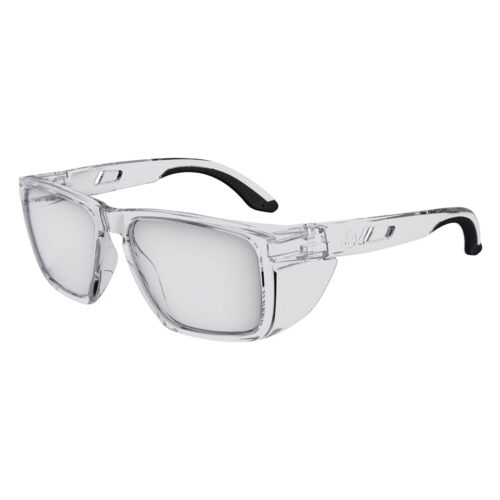
The usual caution applies first: no respirator works without a seal, and this one comes in a single size, so check it on your own face before you rely on it. Press the nosepiece down with both hands and breathe in sharply; if air moves around the edge, it is not sealed, and facial hair on the sealing surface will prevent one. Fluid resistance is about a splash reaching the respirator, not about protecting your eyes, so where splashing is likely you still want a face shield or goggles over the top. As an N95 it is approved for particulates that do not contain oil, and not for gases, vapours or oil aerosols. A note on the labels you will see nearby: a KN95 is certified to a Chinese standard and is not NIOSH approved, so check for a TC-84A number rather than a claim in a product title.