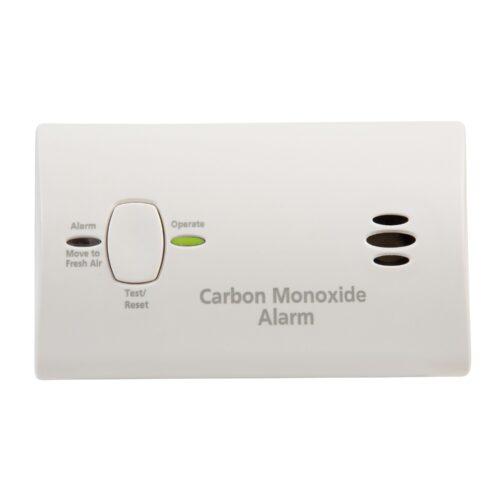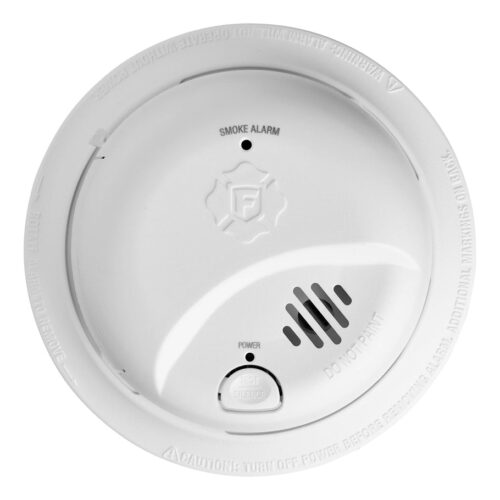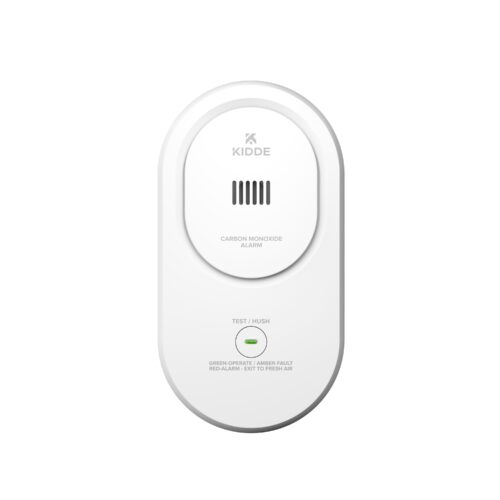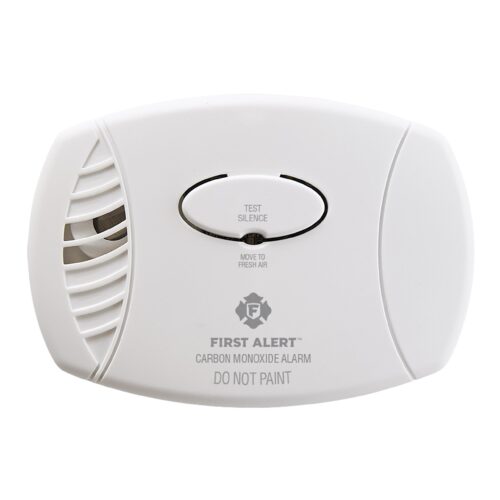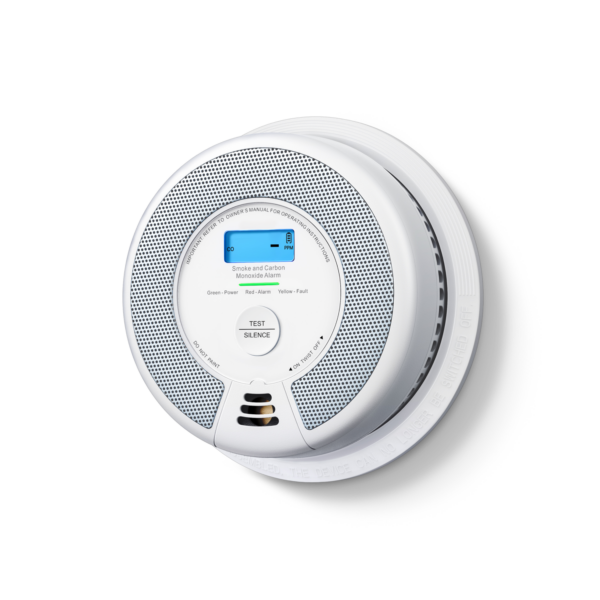
The SC07 covers both smoke and carbon monoxide in one unit, without wiring and without a battery to change. A sealed lithium cell runs it for about ten years, which is also the alarm’s working life, so fitting it is a matter of putting up the bracket and twisting the alarm on. Its sensors are chosen for their jobs: photoelectric for smoke, electrochemical for carbon monoxide.
Key features
- Photoelectric smoke sensor and electrochemical carbon monoxide sensor in one unit
- Sealed ten-year lithium battery, so there are no battery changes and no wiring
- Display shows the carbon monoxide concentration from 30 to 999 ppm, and lights only when the alarm sounds, so it stays dark at night
- Alarm of at least 85 dB at 3 m, with a test and silence button
- Silence lasts up to nine minutes for smoke and six minutes for carbon monoxide
- ETL certified to the UL 217 standard; bracket, screws and anchors supplied
Specifications
- Smoke sensing photoelectric; carbon monoxide sensing electrochemical
- Power: sealed ten-year lithium battery; product life about ten years
- Smoke sensitivity 0.97 to 1.79 per cent per foot obscuration
- Carbon monoxide response: 70 ppm in 60 to 240 minutes, 150 ppm in 10 to 50 minutes, 400 ppm in 4 to 15 minutes
- Alarm 85 dB or more at 9.84 ft, pulsing at about 3.2 kHz
- Best operating range 40 to 100 degrees F, up to 85 per cent relative humidity, non-condensing
This is a sound choice for a room, a flat or a rented home where running cable is not an option and nobody wants to be chasing a chirping battery at two in the morning. Three honest points. The plain SC07 is the standalone model: it does not interconnect with other alarms and has no app, which are the -W, -WX and -MR versions. The battery is sealed and cannot be replaced, so at about ten years the whole alarm is replaced. And photoelectric sensing answers smouldering fires quickly but flaming fires more slowly, which is why many households mix sensing types across the home. ETL certification is Intertek’s mark showing the alarm meets the UL 217 standard, rather than a UL listing itself.